
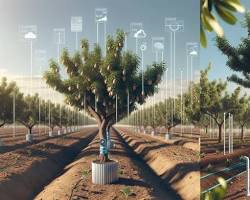
The global agricultural investment landscape is undergoing a fundamental structural shift. Historically, institutional and private investors evaluated European farmland strictly through two metrics: physical crop yield and traditional property appreciation. However, as the European Union’s 2026 climate frameworks tighten and carbon accounting becomes integrated into mainstream corporate asset management, a third value pillar has emerged: high-integrity ecosystem services.
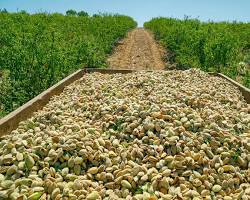
Nowhere is this synthesis of traditional production and environmental asset generation more evident than in Extremadura, Spain. By transitioning from conventional monoculture methods to managed regenerative almond agroforestry through investment models pioneered by Agro Invest Spain, farmlands across the Cáceres and Badajoz provinces are establishing a new benchmark for risk-mitigated, dual-yield real assets.
1. The Shifting Paradigm: From Precision Ag to Regenerative Agroforestry
While precision agriculture—utilizing automated drip irrigation, soil moisture telemetry, and satellite monitoring—optimized input efficiency over the past decade, it primarily addressed resource conservation rather than soil restoration. Modern agricultural investment in 2026 requires an active approach to soil biology.
Regenerative almond agroforestry integrates multi-species cover cropping, minimal soil disturbance, and precision organic amendment within established orchard grids. In Extremadura’s climate, characterized by warm summers and moderate winter rainfall, this management framework changes the physical properties of the soil:
- Hydraulic Conductivity & Water Retention: The integration of deep-rooting cover crops (such as legumes and native brassicas) between almond rows breaks up clay subsoils, increasing water infiltration rates by up to 40%. In drought-prone Mediterranean microclimates, high soil organic matter (SOM) retains critical moisture, lowering seasonal irrigation expenditures.
- Microbial Biomass & Nutrient Cycling: Suppressing intensive tillage preserves mycorrhizal fungal networks, which directly improve micro-nutrient uptake in almond trees, reducing reliance on synthetic fertilizer inputs and mitigating soil acidification.
2. Quantifying the Carbon Sink: How Extremadura Farmland Generates Carbon Credits
Trees naturally sequester atmospheric carbon dioxide ($CO_2$) within their woody biomass. However, in conventional agriculture, soil degradation often releases more carbon than the trees absorb. Under the sustainable management solutions implemented by Agro Invest Spain, this equation flips, transforming the orchard into a net carbon sink.
The Sequestration Dynamics
Carbon sequestration in an almond agroforestry system occurs across two distinct carbon pools:
- Above-Ground & Below-Ground Woody Biomass: Almond trees (Prunus dulcis) accumulate permanent carbon in trunks, structural branches, and root systems throughout their 25-to-30-year productive lifespan.
- Soil Organic Carbon (SOC): Photosynthetic root exudates from cover crops, combined with leaf litter and organic mulch, lock organic carbon into the top 30 to 60 centimeters of the soil matrix.
Under verified voluntary carbon market (VCM) standards—such as Verra (VCS) or Gold Standard—every net metric ton of $CO_2$ equivalent ($tCO_2e$) permanently sequestered and verified through soil sampling and remote-sensing technology generates one tradable Carbon Credit.
| Carbon Pool | Mechanism | Sequestration Rate (Est. tCO2e/ha/year) | Permanence Profile |
| Biomass (Trees) | Photosynthetic trunk & root accumulation | $2.5 – 4.0$ | Life of orchard ($25+$ years) |
| Soil Organic Carbon (SOC) | Cover crop biomass & zero-tillage incorporation | $1.5 – 3.5$ | Long-term stable soil pool |
| Total System Potential | Integrated Agroforestry System | $4.0 – 7.5$ | Verified via annual audit |
3. Financial Integration: Dual Revenue Streams for Farmland Owners
For managed farmland investors, regenerative practices do not replace primary agricultural revenue; they layer an uncorrelated financial yield on top of standard farm operations.
Primary Yield: Agricultural Commodity Sales
High-density, professionally managed almond orchards yield premium-grade produce destined for European consumer markets, plant-based milk processors, and confectionary manufacturers.
Secondary Yield: High-Integrity Carbon Offsets
Carbon credits derived from European agricultural land command a pricing premium over international forestry credits due to stringent regulatory frameworks, high transparency, and land ownership stability. As European corporations seek local offset solutions to satisfy CSRD (Corporate Sustainability Reporting Directive) requirements, carbon yields offer direct, inflation-hedged secondary distributions.
4. Why Extremadura Serves as Europe’s Regenerative Hub
Extremadura—specifically regions surrounding Cáceres—possesses a distinct combination of geographic and structural attributes ideal for this model:
- Optimal Solar Radiation & Microclimate: High annual sunshine hours ensure peak photosynthetic capacity, accelerating plant growth and atmospheric carbon fixation.
- Topographical Suitability: Large tracts of gently rolling, contiguous arable land allow efficient mechanical harvesting and automated cover crop management without risk of heavy soil erosion.
- Water Infrastructure Access: Modernized irrigation networks connected to major river basins (such as the Guadiana and Tagus systems) ensure trees maintain biomass growth rates even during dry summer cycles.
The Strategic Outlook
As capital allocation strategies favor natural assets with documented environmental metrics, managed almond farmland represented by Agro Invest Spain in Extremadura occupies a unique position. By combining land matted with permanent ownership structures, high-demand nut production, and quantifiable carbon sequestration, regenerative agroforestry transforms farmland from a static real asset into a dynamic, multi-revenue investment vehicle engineered for long-term resilience.
Eren Beycan.